 Save
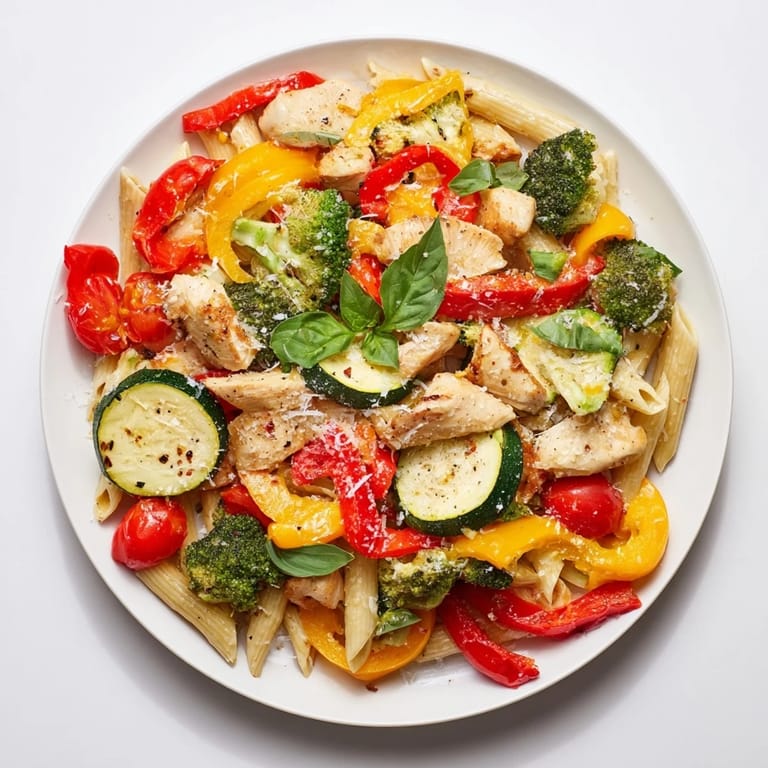
Save There's something about having five different vegetables staring at you from the farmers market that makes you want to use them all at once. One afternoon, I came home with a red bell pepper, zucchini, yellow squash, cherry tomatoes, and broccoli—basically a rainbow I couldn't resist—and decided the fastest way to make them sing together was through pasta. Tossing them with tender chicken and a silky cream sauce turned what could've been a chaotic jumble into something that tasted like I'd actually planned it all along.
I made this for my sister during a surprise dinner visit, and she spent most of the meal asking what was different—turns out it was just that the vegetables were actually cooked through instead of raw, and they had time to soften into the sauce. She asked for the recipe before dessert, which felt like the highest compliment I could get.
Ingredients
- Boneless, skinless chicken breasts (300 g): Cut into bite-sized pieces so they cook quickly and distribute throughout the pasta evenly—no one piece dominates the plate.
- Red bell pepper: The sweetness balances the earthiness of the zucchini; slice it thin enough that it softens but stays slightly snappy.
- Zucchini and yellow squash: These two are almost interchangeable, but using both gives you color variety and a subtle flavor difference that adds interest.
- Cherry tomatoes (1 cup): Halve them so they burst slightly when heated, releasing their juice into the sauce.
- Broccoli florets (1 cup): Use the smaller, tender florets rather than tough stalks; they cook faster and feel less heavy on the plate.
- Penne or farfalle pasta (300 g): Shapes with curves and ridges catch the sauce better than smooth noodles.
- Heavy cream (60 ml): This is what turns the vegetables into a cohesive dish instead of random vegetables with pasta.
- Parmesan cheese (30 g): Freshly grated melts into the heat and creates a silkier sauce than pre-grated.
- Garlic (3 cloves): Mince it fine so it dissolves into the oil and flavors everything subtly rather than asserting itself in chunks.
- Olive oil (2 tablespoons): Good enough that you'd drizzle it on bread, but not so fancy it breaks the budget.
- Dried Italian herbs (1 teaspoon): These add gentle background flavor without needing fresh herbs, though basil at the end elevates everything.
- Salt and black pepper: Season at multiple stages rather than all at once; you'll taste the difference.
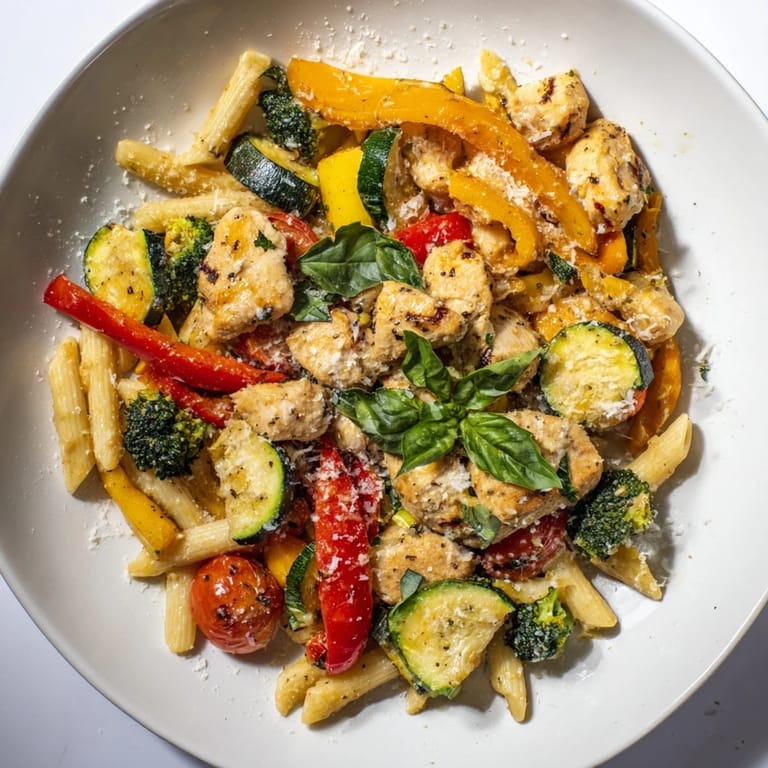
- Fresh basil leaves: Optional but worth tearing over the top just before serving—the aroma alone makes people slow down to actually enjoy the meal.
Tired of Takeout? 🥡
Get 10 meals you can make faster than delivery arrives. Seriously.
One email. No spam. Unsubscribe anytime.
Instructions
- Start the pasta:
- Bring a large pot of salted water to a rolling boil and cook your pasta to al dente according to the package directions. Before draining, scoop out about 1/2 cup of that starchy water—it's liquid gold for loosening the sauce later.
- Sear the chicken:
- While water heats, warm olive oil in a large skillet over medium-high heat until it shimmers slightly. Add the chicken pieces in a single layer and resist the urge to move them around immediately; let them sit for 2-3 minutes until they develop a golden crust, then flip and finish cooking until no pink remains inside. This takes about 5-6 minutes total.
- Soften the aromatics:
- Set the cooked chicken aside on a clean plate. Add a little more oil to the skillet if the bottom looks dry, then drop in your minced garlic and let it toast for just 30 seconds—you want fragrant and golden, not burnt and bitter.
- Build the vegetable base:
- Add your bell pepper, zucchini, yellow squash, and broccoli florets to the skillet and toss them in the garlicky oil. Cook for about 4-5 minutes over medium-high heat, stirring often, until the vegetables start to soften at the edges but still have some firmness when you bite into them.
- Bring everything together:
- Return the chicken to the skillet, add the halved cherry tomatoes, and stir gently. Cook for 2 more minutes until the tomatoes start to blush and release their juices.
- Create the sauce:
- Lower the heat to medium-low and add your drained pasta directly to the skillet along with the heavy cream, grated Parmesan, and dried Italian herbs. Toss everything together gently, using tongs or two spoons, until the pasta is evenly coated. If the sauce looks too thick or dry, add your reserved pasta water a splash at a time, stirring between additions, until you reach a silky, glossy consistency.
- Taste and adjust:
- Take a bite and adjust salt and pepper as needed—this moment matters because seasoning at the end tastes fresher than seasoning at the beginning.
- Plate and finish:
- Divide among four bowls or plates and top with torn fresh basil leaves if you have them and a shower of extra Parmesan cheese.
 Save
Save My neighbor once asked if I used heavy cream in my pasta because she'd never had it taste this rich on a weeknight. It felt like a small victory—proof that simple ingredients, given a little attention, can taste like you tried much harder than you actually did.
Variations Worth Trying
This recipe is forgiving, which is part of why it works so well. Swap the chicken for crumbled tofu if you're cooking vegetarian, or use chickpeas for a different kind of protein that soaks up the cream sauce beautifully. Whole wheat pasta adds an earthiness that plays nicely with the vegetables, and you can substitute any tender vegetables you have on hand—asparagus, snap peas, or mushrooms all belong here.
Pairing and Serving
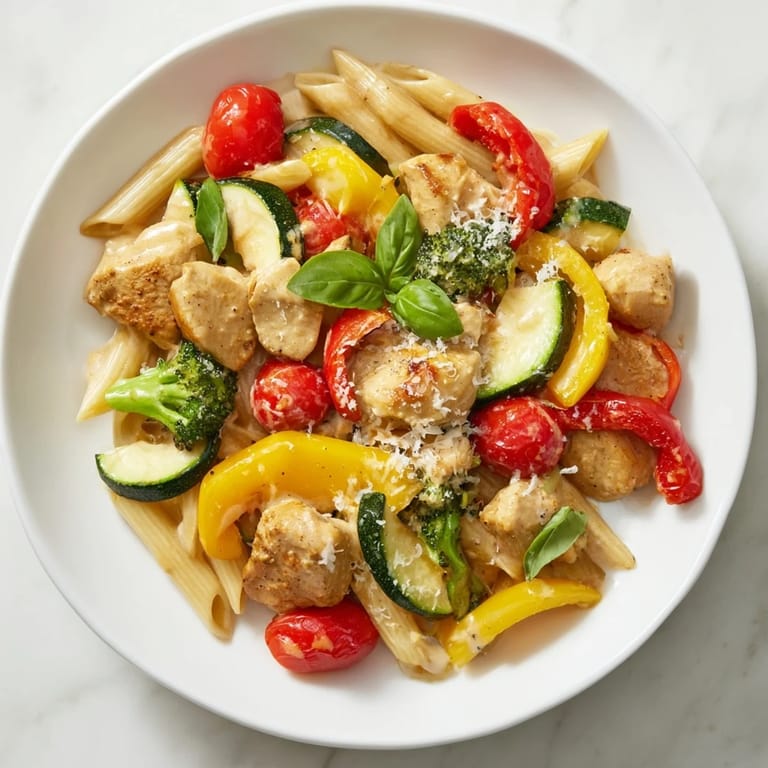
This pasta is substantial enough to stand alone, but a crisp Sauvignon Blanc cuts through the cream in a way that makes each bite feel lighter. If you're avoiding wine, sparkling water with fresh lemon does something similar. Serve it warm immediately after plating so the cheese stays glossy and everything tastes its best.
Kitchen Lessons Learned
Over time, I've learned that the order you add ingredients really does matter—it's not fussy, it's just efficient. Garlic blooms faster than onions, vegetables release water if you salt them too early, and cream breaks if your heat is too high at the end. None of these are disasters if they happen, but knowing them means fewer surprises and more confidence in your own instincts.
- Bite a piece of pasta straight from the pan before adding the sauce to make sure it's actually al dente and not just soft.
- If your sauce breaks or looks separated, a splash of pasta water and gentle stirring usually brings it back together.
- This recipe scales easily—double everything if you're feeding six people, and it still comes together in roughly the same time.
 Save
Save This is the kind of meal that proves you don't need complicated techniques or obscure ingredients to cook something worth remembering. Five vegetables, some chicken, pasta, and cream transform into something that tastes like you care—and really, that's what makes people want to come back to your table.
Recipe FAQs
- → How do I ensure the chicken stays tender?
Sauté chicken pieces over medium-high heat until golden and cooked through, about 5-6 minutes, avoiding overcooking to keep them juicy.
- → Can I substitute the vegetables in this dish?
Yes, you can swap in other fresh veggies like asparagus, peas, or spinach based on availability and preference.
- → What’s the best way to make the sauce creamy without it being heavy?
Use a small amount of heavy cream combined with reserved pasta water to create a light, silky sauce that coats the pasta evenly.
- → Which pasta varieties work best here?
Penne and farfalle hold the sauce well, but other short pasta shapes like fusilli or rigatoni can also be used effectively.
- → How can I add more herb flavor to this dish?
Adding fresh basil at the end enhances aroma, while dried Italian herbs during cooking build a deeper savory profile.
- → Is there a vegetarian alternative that maintains protein content?
Swap chicken for tofu or chickpeas to keep protein levels high without changing the dish’s texture significantly.